It’s so easy these days to have our food delivered from a local grocery store or restaurant. During the recent covid pandemic, more and more consumers have began to rely on home-delivery services like Doordash, Grubhub, and Uber Eats rather than eating out or shopping for their weekly food supplies. Yet, 18% of consumers still view delivery/take-out as being too risky!
How sure are you that the food delivered to your door has been handled properly according to food safety protocols? This is especially important to prevent food-borne illnesses in older members of the family, young children, those with compromised immune systems and pregnant women.
Restaurant Deliveries
Check the company before buying: Call the company you are buying from and ask about food safety practices. They will probably be shocked as not many people take this precaution. Does the staff preparing the foods regularly perform quality assurance checks? Who is responsible if the food is delivered at an unacceptably high temperature? Do they provide information with each shipment about safe handling and preparation of the food, including cooking temperatures? How do their delivery drivers handle the orders? Do they have an efficient delivery tracking system? What is the maximum delivery time (duration)?
Ensure foods are prepared properly prior to delivery
Check Inspection Scores: Check a restaurant’s inspection report at your health department’s website before purchasing.
Accepting the delivery: Be sure someone is home when delivery is expected so that perishable foods such as frozen vegetables and meat, seafood, or items prepared with dairy can be quickly placed in the refrigerator or freezer. Food should not be left outside until someone returns home. If you simply cannot be home at the expected time of delivery, specify a safe location away from pets and rodents. Be sure to let the company know this location.
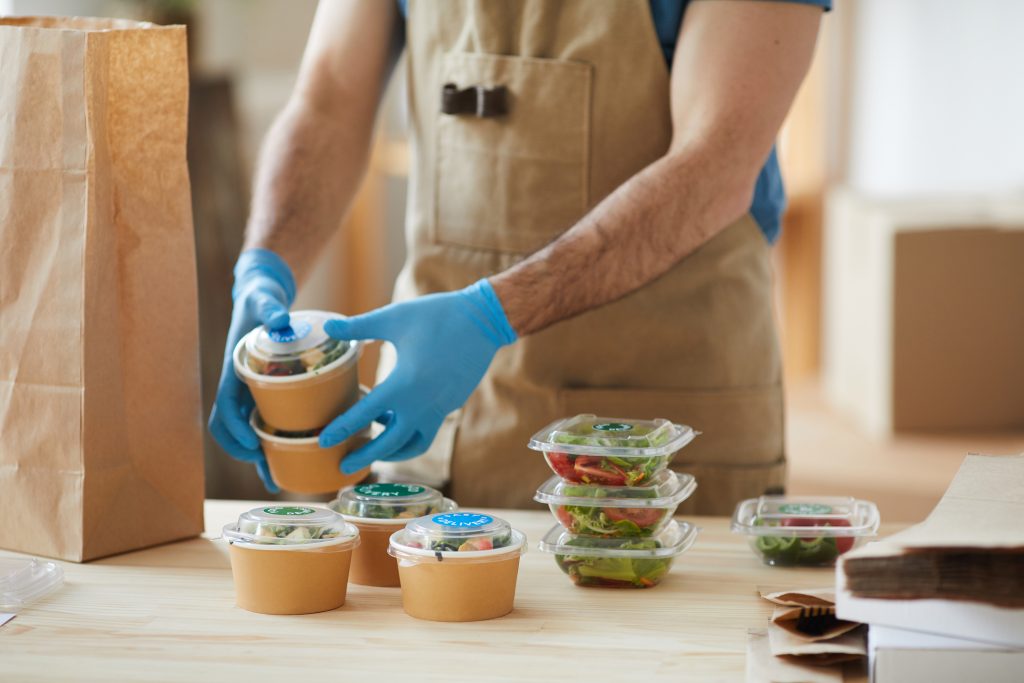
Once you receive the goods, examine the items and packaging to ensure it is what you ordered, and the packaging material is appropriate. Is the packaging insulated to keep your food warm? Diid they use dry ice of frozen gel packs to keep food cold or frozen? Check for labels that say “Keep Refrigerated” or Keep Frozen” if the food is perishable. Note that 56% of consumers say that factory-sealed sauces and dressings are the safest type of packaging for take-out and delivery orders.
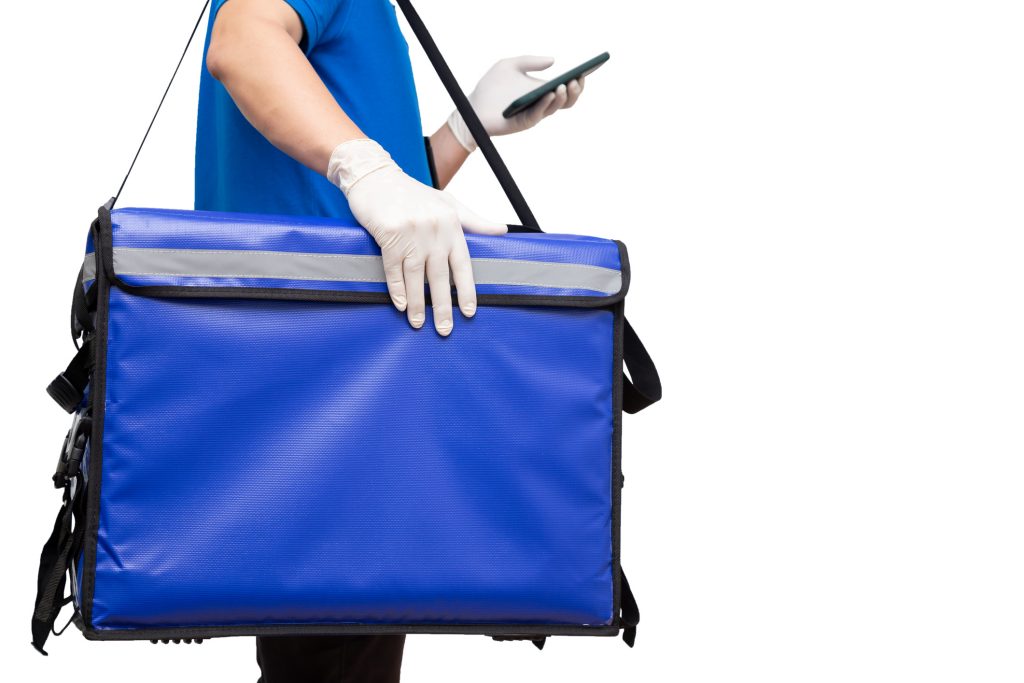
Is food delivered in insulated container?
Frozen Foods: Perishable food should arrive frozen or partially frozen with ice crystals still visible or at least as cold as it would be in your refrigerator (40 degrees F or below.) Even if the product is smoked, cured or vacuum-packed or fully cooked, it must still be kept cold. Once you confirm it is still at an acceptable temperature, place it in the refrigerator or freezer as soon as possible.
Do not eat, sample or even “just taste” any food that arrives above 40 degrees F to see if it is still good. Notify the company where you purchased the food and request a refund. Although foods may look and smell alright, they can still be unsafe. Cooked meals can make you sick if they sit out for more than 2 hours or as little as 1 hour if the weather is hot outside (90 degrees F).
Local Grocery Deliveries
Many of the same procedures apply as with restaurant delivery. In the case of groceries, hot food should arrive hot and cold food should arrive cold. Perishable foods must arrive at a safe temperature. Food should not be kept at room temperature for more than 2 hours in the winter and not more than one hour if temperatures are hot outside. Hot and cold foods should be separated from each other.
As with restaurants, check with your local grocery about their food safety policies as they apply to food delivery.
Report Foodborne Illnesses Immediately: If you think the food delivered to your home has caused someone to become ill, contact your local health department to report it. Give them information about the order and the symptoms the sick person is experiencing.