Here in America, we enjoy relatively cheap food prices compared to other areas of the world. But good things don’t last forever…so don’t be surprised by the coming strategy changes and price increases when shopping at your local supermarket. Sure, I’m grateful that the shelves are stocked with a variety of the latest delicacies from frozen to canned foods, and that I can enjoy fresh blueberries throughout the year, but everything comes with a price and food prices are no exception.
Brace for higher food prices
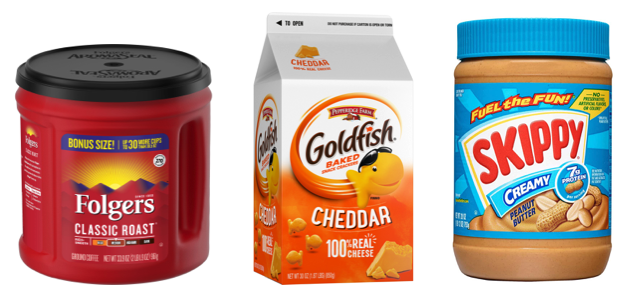
Watch for price increases this summer and into the fall months on items like Goldfish crackers, Folger’s coffee, and pet food, as manufacturers like General Mills, Campbell Soup and J.M. Smucker Co. raise the wholesale prices to supermarkets who will naturally pass the increases on to their customers. Conagra Brands has already raised prices on its Hunt’s canned tomatoes and Chef Boyardee products to help cover the cost of higher steel and aluminum prices. Hormel has also implemented price increases on products like Skippy Peanut Butter, deli meats and Jennie-O turkey. Many food manufacturers will make upward price adjustments to help offset the recent price increases – they simply must.
Prices going up!
“We now see broad-based inflation across our various commodities, packaging materials and transportation costs,” Mark Schneider, Nestle’s CEO told analysts last month. “Not all of these items can be hedged and our hedging cover for a number of commodities will run out over time. We are raising prices where appropriate.”
Discount volume and nature will change: One way to avoid increasing prices significantly is not to offer so many discounts and many manufacturers will take this approach. You’ll find the discounts offered will be smaller and geared toward the higher priced, higher margin items.
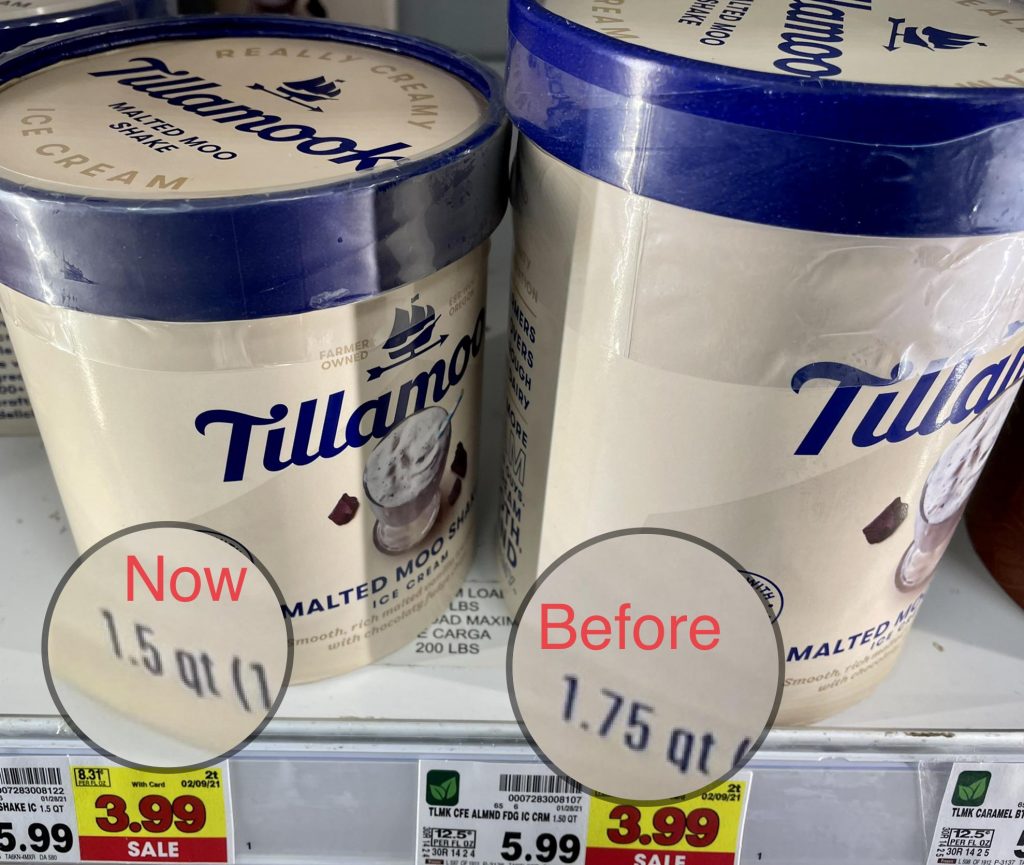
Tricks of the Trade: They hope you won’t noticethat the contents or volume in certain packaging has been reduced or a change in the packaging itself; it’s yet another way to charge more per ounce or per unit to the customer. For example, Tillamook Dairy in Oregon recently changed their ice cream container from 56 ounces to 48 ounces but kept the price the same. Put less inside the package – it’s called shrinkflation. If you’re dining out, you may notice that the portion sizes have become smaller at some restaurants. This is a touchy area and must be handled carefully, especially if consumers begin to feel cheated on value for price.
Size of container reduced from 56 oz to 48 oz.
Why all the price hikes? Everything cost more these days from ingredients to transportation, packaging, and labor. At the start of the pandemic there were a great number of supply chain disruptions, many of which are still unresolved and continue to have negative effects on the food industry as well as other industries. “Ocean freight rates, measured by the Baltic Dry Index (a measure of shipping costs) have increased around 2-3 times in the last twelve months while higher gasoline prices and truck driver shortages in some regions are pushing up the cost of road transport services.” Finding reliable labor is a real issue and food plants, production facilities, restaurants and supermarkets are moving more towards AI (artificial intelligence) and robotic help in the kitchen and supermarket aisles in search of cheaper, more reliable labor.
Perhaps no one put it better than Phil Lempert, Food Industry Analyst and Editor of Supermarket Guru.com:
“Before we might have seen price increases because of certain raw material, or feed for animals, but we’ve never seen this perfect storm hit packaging transportation, cost of goods…It’s a mess. It really is, and as a result the money has to come from somewhere.”
Brace yourself for higher prices ahead.
Lily Noon
References:
USDA predicts grocery prices will continue to rise in 2021 by Taylor Neuman, Spectrum News1, www.spectrumlocalnews.com
Deep Dive: As inflation rages, food and beverage manufacturers pass higher costs on to consumers by Christopher Doering, Food Dive, www.fooddive.com
You’re Paying More for Food – and You Might Not Know It by Annie Gasparro and Heather Haddon, Wall Street Journal, www.wsj.com
USDA Economic Research Service Food Price Outlook 2021, USDA, www.USDA.gov
How Companies Disguise Rising Food Prices by Kristin Schwab, Marketplace, www.marketplace.org
Four Facts About Soaring Consumer Food Prices by Christian Bogmans, Andrea Pescatori and Ervin Prifti, IMF, www.imf.org
「USDA predicts grocery prices will continue to rise in 2021」(米国農務省、2021年の食料品の値上がり継続を予測)、著:Taylor Neuman、Spectrum News1、www.spectrumlocalnews.com
「Deep Dive: As inflation rages, food and beverage manufacturers pass higher costs on to consumers」(徹底追究:インフレの広まりを受け、食品・飲料メーカーが消費者に価格転嫁)、著:Christopher Doering、Food Dive、www.fooddive.com
「You’re Paying More for Food – and You Might Not Know It」(気付いていないかもしれない食品の値上がり)、著:Annie Gasparro、Heather Haddon、Wall Street Journal、www.wsj.com
「USDA Economic Research Service Food Price Outlook 2021」(米国農務省・経済リサーチ・サービス局の食品価格展望)、米国農務省、www.USDA.gov